(Except for maybe Monty Python Fans!)
What do we think of when we think of the Spanish Inquisition? Torquemada? Torture? Primitive Waterboarding? Burning of Heretics? All of the above. The inquisition served to maintain converted Jews and Muslims soundly in the practices of Catholicism-under penalty of death and the tortures listed above. It started in the late 1470's at the behest of the Spanish monarchy at the time and authorized by a Papal bull from Pope Sixtus IV. The inquisitors would enter a town, read a decree, and encourage accusers to come forward anonymously to denounce violators or voluntarily present themselves if they felt they needed to "relieve their consciences". Violators would be imprisoned, the case examined, and the trial started. Torture was used to interrogate the alleged violator and force a confession. Then the decision would be made and a punishment handed down- If you were convicted of heresy and impenitent, or relapsed into a previous religious practice, you were "relaxed" to the secular arm for burning at the stake publicly.
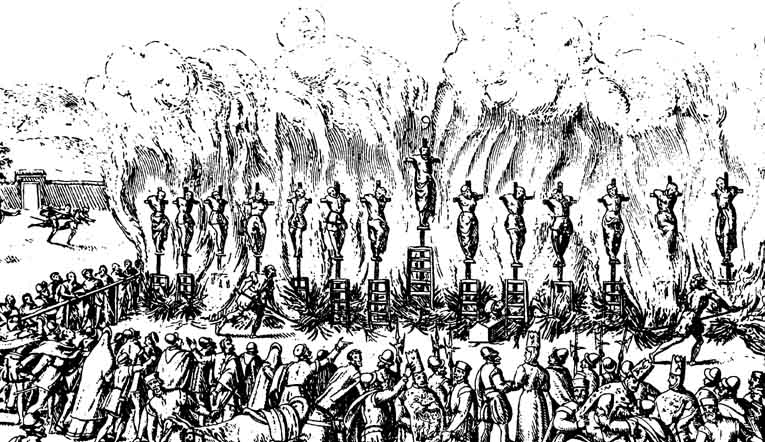
Fast forward about 70 years. The inquisition is slowing down and Spanish Catholics have set their sights on new territory: The Americas. Cortés is smashing his way across Mexico in 1519, planting crosses, smashing idols, and fighting (Porterfield, 20) Upon entering an area and establishing their authority, they would read aloud the Requirimiento. A document that summarized the history of the world and their right to preside over their souls and land on the authority of Spain and the Pope. Sound familiar? During the inquisition it was called the Edict of Grace and laid down the heresies that would be prosecuted.
The Spanish ruled over their territories with an iron fist. Natives would be enslaved in encomiendas: forced labor camps awarded to entrepreneurs by colonial governors. Ritual dances were banned by Franciscan missionaries as pagan worship. Severe punishments were meted out to those who failed to follow commands given by the priests, some were even burned at the stake.

Yet again, sound familiar? The Spanish burned non-believers at the stake during the Inquisition.
Food for Thought:
Are these two events linked?
Did the atrocities of the Spanish upon their own people in the name of the church play a role in their treatment of natives during their colonization of the Americas?
Why did the Spanish feel the need for such violence and enslavery for their expansion?

No comments:
Post a Comment