
My name is Robert. I am a student, advocate, and library associate. Presently, I'm enrolled in a class entitled "American Religions," for which as a course requirement I am posting to this online blog. I am also a first-generation Irish-American, and that's one of the reasons I've enrolled in this course. If I may explain:

To be ethnically Irish, it means that one is Catholic. If you go to the Republic of Ireland and tell a local person you're Irish, they will nearly always assume that you're Catholic. It's a religious identity that's linked to an ethnicity and national identity, not much different that that of a Turkish citizen being Muslim. One may be a legal citizen of the Irish Republic, but one will not be considered ethnically "Irish" unless one is identified as Catholic. To be ethnically Turkish, one is a Muslim.
If you go Ulster (Northern Ireland), it's best not to say anything at all. If a local should ask, tell them that you're a yank. They'll understand. By no means should you wear or possess anything that is orange in color. That color would suggest that you're a Unionist, and a trouble-maker.
Ulster is a post-Colonial commonwealth nation with a lot of problems, the likes of which there is too little time to discuss them here. These are heretofore known as The Troubles. It is of no wonder my mother's family left Belfast when my mother became pregnant with me in the summer of 1960: it's not a city for which one would want to raise a child.
Religion and Government in the Old World
As we discussed over the introductory chapters of our required texts, religion, politics and government are inextricably tied to each other. Kings and queens - throughout the millennia - have used religious beliefs, rituals, and traditions to justify their positions of leadership and power, so much that myth was created that these were considered emissaries of, and among the chosen by divine some sort of a divine power. This continued well into the twentieth century with Japanese Emperor Hirohito considered a "living god" and "the Son of Heaven."
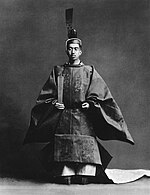
Religion and Empire
In the twentieth-century was the Japanese Empire that made the most of their "living god" and "Son of Heaven" to justify acts of violent aggression and military conquest, for which they were to later suffer horribly. This is nothing new or even recently so. More living beings have been forced to experience suffering and death by means of religious justification, than by any other.
Our readings in R.A.H. and later discussions of the text were about earlier empires coming to New World and doing so while claiming to be in possession of divine right to engage in military - and often violent - agression, whenever indigenous peoples were encountered. A monarch - being considered a representative chosen by the divine - were the reason for the Conquistadores and missionaries considered themselves responsible for "civilizing" and "Christianizing" the indigenous.

A More Perfect Ideal
Along with empires, came the immigrants: the dissident, the unwanted, and those wanting to start over. These are the dissident, the enslaved, the indentured, the illegitimate, the Pilgrims, and the Puritans.
A Less Perfect Society
Given the time in which Europeans arrived in the New World, the societies in which they originated from were far exceeded by the ideals for which these societies sought to achieve.
For the early arrivals, "civilized" meant Christian, European, and of fair complexion. Those indigenous peoples encountered along the way and destination, were "uncivilized," "Un-Christian" and taken of Monsieur Diable, "Mister Devil."
It is all to easy to judge the activities of these early settlers to the New World by the the hindsight that we now posses. It is not so easy to understand the ways of thinking and understanding of these from where they were and during the times in which they were there. For this reason, it easier to forgive them.
Not so easy to forgive are the ways in which the aforementioned attempted to "civilize" and "Christianize" the indigenous peoples for which early settlers, missionaries, and Conquistadores often behaved violently. They were behaving in such away they only knew and might have felt obliged to do so.
None of us reading this were there at the time, none of us can really know.

Even as late as the 1960's, the ideal of the divine was that of a human who came to earth as a fair-skinned person with blue eyes, even though his birth has been written to be a part of the world in which we know it, not far below the equator where human beings known to be - in response to the geography - of a dark skin color and brown eyes.
In the reaction to an act of wanton violence directed towards those who did not have have fair skin and blue eyes, the idea of a "white Jesus" was finally challenged in the New World. That, as we have discussed, took place after the bombing of the Sixteenth Street Baptist Church in Birmingham, Alabama on the day of September 15, 1963.
To summarize, we have read and discusses how imperfect societies have sought more perfect ideals but in trying to achieve those ideals, have engage in behaviors which we today would call into question with our modern hindsight.
Such acts as violent conquest, the hanging and burning of indigenous peoples or the bombing of a church are not worthy of any justification, whatsoever. It for us to try to understand the history and context in which these atrocious acts took place. By doing so, we can learn how we might be better able to prevent such acts from taking place in the future.
Have a good weekend, everyone. R.L.B.

This was so interesting to read! I enjoyed your placing of different groups' religious perspectives throughout the post.
ReplyDelete